
Local LLMs vs Cloud-Based AI: The Complete Business Guide to Choosing Your AI Automation Strategy
[First published 11th July 2025 – Updated Information by Malcolm Gibb on 9th June 2026]
When we first published this guide in 2025, the choice between running AI models on your own hardware and using a cloud service like ChatGPT was a genuine trade-off between control and capability.
A year on, both sides of that trade-off have moved so far, so fast, that the question is worth asking again from scratch.
Open models you can run yourself have caught up to – and in some cases overtaken – last year’s flagship cloud models. At the same time, the big cloud providers have closed much of the privacy gap that used to make local deployment the only serious option for sensitive data. And a third option, sitting neatly between the two, has gone from niche to mainstream.
This decision still touches everything from your data security to your monthly costs. With most UK businesses now spending real money on AI, the wrong choice can quietly expose you to unnecessary cost, risk, or a ceiling on what you can build.
Here is everything you need to make an informed decision in the current landscape – without disappearing into the technical weeds.
What Are Local vs Cloud-Based LLMs?
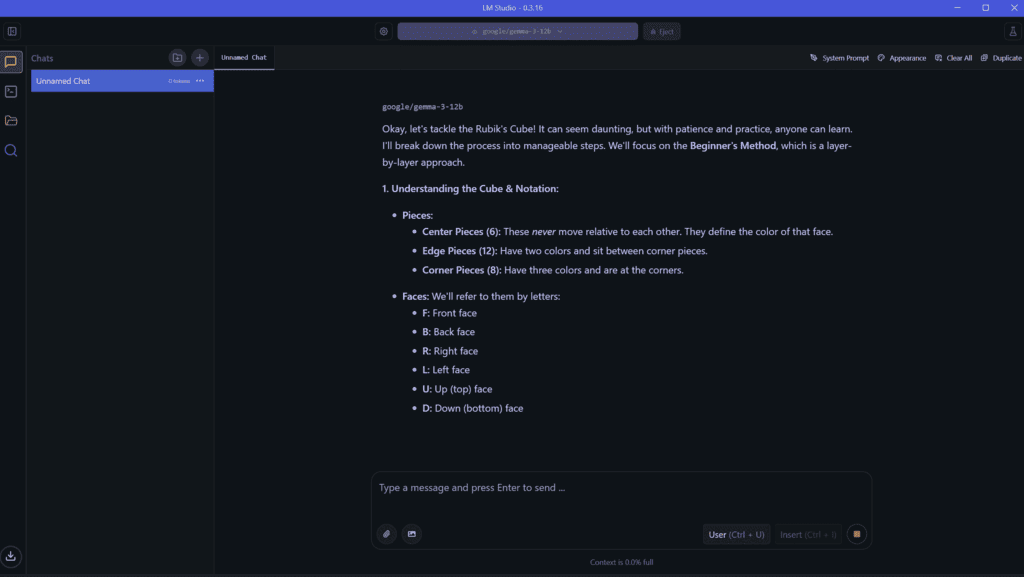
Local LLMs are AI models that run entirely on your own systems – your office server, a desktop, a dedicated mini PC, or your own private cloud. Tools like Ollama, LM Studio, and llama.cpp let you download and run powerful models without sending any data to an external company. The models themselves are “open-weight”: their parameters are published, so anyone can download, run, and fine-tune them.
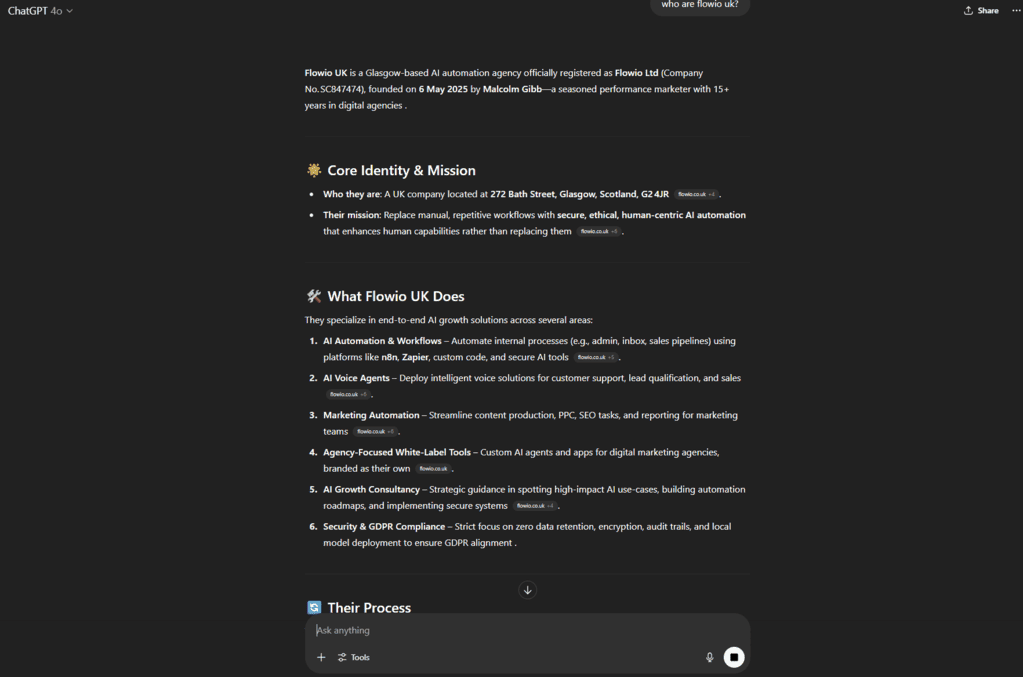
Cloud-based LLMs are the AI services you are probably already using, hosted by companies like OpenAI (ChatGPT), Anthropic (Claude), Google (Gemini), and Microsoft (Copilot). You access them through a web interface or an API, and your data is processed on their servers.
There is now a meaningful third option that has become one of the most important developments of the past year: running open-weight models inside your own cloud account – on AWS Bedrock, Google Vertex AI, or Microsoft Azure AI Foundry. You get capable, near-frontier models, your data stays within your own cloud tenancy and region, and you never have to buy or maintain a single piece of hardware. We will come back to this, because for a lot of UK businesses it is the sweet spot.
The Security and Privacy Divide
For many UK businesses, data security and privacy remain the deciding factor. UK GDPR still governs how you handle personal data, and that obligation does not pause because you have started using AI. Security needs to be front of mind for every AI workflow in your business.
The important update for 2026 is that this is no longer a simple “local good, cloud risky” picture. The gap has narrowed considerably, and the nature of the guarantee is what now differs.
Local LLMs: Physical Control
When you run a model locally, your data never leaves your premises. Every document, conversation, and sensitive record stays inside an environment you physically control. This gives you:
- Zero data transmission to external servers
- Complete audit trails of how your data is used
- No third-party access to your business information
- The option of a fully air-gapped system for the most critical work
For example, a law firm reviewing privileged client documents can summarise contracts and research case law on a local model with no risk of that information ever leaving the building. A mortgage broker can have a local model triage and summarise customer financial applications without personal data being processed by an outside party. This is still the gold standard when you need to prove that data never left your control.
Cloud-Based LLMs: Contractual Control – Now Much Stronger
The headline change since 2025 is that the major providers have built proper enterprise privacy controls, and on business tiers your data is no longer fed into model training by default.
- OpenAI does not train on business or API data, and now offers data residency at rest in the UK and Europe (among other regions) for eligible Enterprise, Edu, and API customers, plus the option of in-region inference and Zero Data Retention (ZDR) on supported endpoints. Note that residency on the newest models carries a small uplift, and ZDR/residency is a configuration you have to set up rather than a default.
- Anthropic (Claude) reduced standard API log retention to 7 days, never uses API data for training, is UK GDPR compliant, and uses EU Standard Contractual Clauses and the UK International Data Transfer Addendum for transfers. Zero Data Retention is available for qualifying Enterprise customers, and Claude is available through AWS Bedrock and Google Vertex AI so the data can stay inside your own cloud.
- Google (Gemini) offers enterprise data residency, commits not to train on customer data on its enterprise tiers, and through Vertex AI keeps your data within your chosen region and project.
The practical upshot: for most UK SMBs, a cloud model on a business or enterprise tier with a signed Data Processing Agreement is now a GDPR-workable option – provided you have actually read the terms and configured the region and retention settings.
The free and consumer tiers remain less protective and should not be used for personal or commercial-sensitive data.
The remaining distinction is honest and simple. Cloud gives you a contractual guarantee – a legal promise, backed by certifications and a DPA – that your data is handled correctly. Local gives you a physical guarantee – the data demonstrably never left your premises.
For genuinely sensitive or regulated data, or where you need to evidence that nothing left your control, local (or the private-cloud route below) still wins.
The Middle Path: Open-Weight Models in Your Own Cloud
This is worth its own mention because it solves the old dilemma for a lot of businesses.
By running an open-weight model (Gemma 4, Llama 4, Qwen, a Mistral model, and so on) inside your own AWS, Google Cloud, or Azure account, your prompts and data stay within your cloud tenancy and region, you keep your existing security and compliance posture, and you avoid buying GPUs entirely. You get most of the data-control benefits of local deployment with most of the convenience of cloud. For UK firms that want control without a hardware project, this is often the right answer.
Deployment and Maintenance: Effort vs Convenience
Local LLMs: A Real Project, But Far Cheaper Than It Was
The biggest practical change since 2025 is on the hardware side. The arrival of unified-memory machines – Apple Silicon Macs, AMD’s Ryzen AI / Strix Halo mini PCs, and NVIDIA’s DGX Spark – has completely reset the cost of running capable models at home or in a small office.
Where we previously quoted £5,000-£30,000, the realistic figures today are:
- Entry level (~£600): a Mac Mini with unified memory, or a 16-24GB consumer GPU, comfortably runs small-to-mid models (7B-14B) for summarisation, drafting, and internal automation. You may have seen everyone rushing to buy a Mac Mini for use with Openclaw – and there’s a reason behind that.
- Capable single box (~£2,000-£4,000): a Mac Studio, an AMD Ryzen AI Max mini PC, or an NVIDIA DGX Spark will run a 70B-class model entirely in memory at usable speed – enough for serious document work and a small number of users.
- Multi-user or heavy workloads (£5,000+): multi-GPU setups or the largest models still cost more and need proper engineering.
You still need someone to install, configure, secure, update, and maintain it – whether that is in-house IT or an agency partner. But the entry price for a genuinely useful local setup is now a fraction of what it was, which is why local deployment is back on the table for smaller businesses.
Cloud-Based LLMs: Instant Access, Pay-As-You-Go
Cloud has the same advantages it always did, only cheaper per token:
- Immediate deployment: sign up and start within minutes
- No hardware costs: pay only for what you use
- Automatic updates: always on the latest model
- Effortless scaling: handle any workload without touching infrastructure
The cost story has two sides.
Per-token prices have fallen – Google’s Gemini 3.1 Pro is around $2/$12 per million input/output tokens, Claude Opus 4.8 is $5/$25, and OpenAI’s mid-tier models sit between them, while some open-weight models served via API (DeepSeek, for instance) are cheaper still.
But usage has risen sharply, because reasoning models and “agentic” workflows consume far more tokens than a simple chat did in 2025. The net effect for a small business is typically £30-£300 a month, but it is worth monitoring, because agentic automations can run up a bill quickly if left unchecked.
Performance and Capability Comparison
Local LLMs: No Longer “Good Enough” – Now Genuinely Capable
This is the section that has changed the most. In 2025, the honest line was that a good local model was roughly GPT-3.5 quality. That is comprehensively out of date.
Today’s open-weight models: Llama 4, Qwen 3.5/3.6, DeepSeek V4, GLM-5.1, Kimi K2.6, Google’s Gemma 4, Mistral’s models, and Microsoft’s Phi-4 – match or beat last generation’s flagship proprietary models on many benchmarks.
The largest of them (DeepSeek V4, the biggest Qwen and Llama variants) need serious multi-GPU hardware or a cloud GPU to run well. But the mid-size models – a Gemma 4 around 26-31B, or a mid-size Qwen – run on a single capable box and handle real business work: document summarisation, customer-service drafting, content generation, data extraction, and step-by-step analysis to a standard that would have been considered frontier 18 months ago.
It is also worth noting that OpenAI itself now ships open-weight models (the gpt-oss family), so the “open” field includes contributions from the same labs that build the leading closed models. The open-weight landscape moves monthly, so the specific “best” model is a moving target – but the headline is that you no longer have to choose between privacy and capability.
Cloud-Based LLMs: Still the Frontier Ceiling
Cloud providers still hold the top of the capability curve.
The current flagships: OpenAI’s GPT-5.5, Anthropic’s Claude Opus 4.8, and Google’s Gemini 3.1 Pro (with Gemini 3.5 Flash for fast, cost-efficient agentic work) – lead on the hardest reasoning, the most reliable long-running agentic tasks, advanced coding, multimodal understanding, and very long context (up to a million tokens or more).
For the most demanding, highest-stakes, or most autonomous work, cloud still has the edge. The difference now is that the edge is narrower, and for a large share of everyday business tasks a well-chosen open model is more than sufficient.blog post “OpenAI Releases GPT-OSS 20B and 120B: A New Era for Open-Weight Reasoning Models”.
The Comparison of Cloud-Based LLMs vs. Local LLMs for Automation
Local LLMs vs Cloud-Based LLMs: The 2026 Comparison
| Feature / Factor | Local LLMs | Cloud-Based LLMs |
|---|---|---|
| Data Security & Privacy | Physical control. Data never leaves your premises; full audit trail; air-gapping possible. The standard when you must prove data didn’t leave. | Contractual control – now strong. Business/enterprise tiers don’t train on your data; ZDR and UK/EU data residency available (often a paid tier or a setting you configure, not a default). |
| Upfront Investment | Moderate. From ~£600 for an entry setup; ~£2,000-£4,000 for a capable single box that runs a 70B-class model; more for multi-user. | Minimal. No hardware. Start within minutes via API or web interface. |
| Ongoing Costs | Fixed and predictable. Electricity and maintenance. Best for high-volume, long-term cost control. | Variable. Pay-as-you-go per token. Cheaper per token than in 2025, but agentic/reasoning workloads use far more tokens – monitor spend. |
| Technical Maintenance | Hands-on. In-house IT or an agency partner installs, secures, patches, and scales it. | None. The provider manages all infrastructure, updates, and scaling. |
| Performance & Capabilities | Genuinely capable. Mid-size open models match last-gen flagships; strong for summarisation, drafting, analysis, and internal automation. Hardware-bound. | Frontier ceiling. Best reasoning, agentic reliability, coding, multimodal, and ultra-long context. |
| Example Models | Llama 4, Qwen 3.5/3.6, DeepSeek V4, GLM-5.1, Gemma 4, Mistral, Phi-4, OpenAI gpt-oss. | GPT-5.5 (OpenAI), Claude Opus 4.8 (Anthropic), Gemini 3.1 Pro / 3.5 Flash (Google). |
| Best Suited For | Healthcare, legal, financial services – or any business with strict compliance, sensitive data, high volume, and some technical resource. | SMBs, agencies, and teams needing rapid deployment, frontier capability, or unpredictable/seasonal scaling. |
And the middle path – open-weight models in your own cloud (AWS Bedrock, Google Vertex AI, Azure AI Foundry) – gives you near-frontier capability with your data kept inside your own tenancy and region, and no hardware to buy. For many UK SMBs that want control without a hardware project, this is now the most pragmatic option of all.
The 2026 Regulatory Landscape (and Why It Matters)
You asked us to cover standards, and they have moved meaningfully. This is general information, not legal advice – but here is what every UK business owner should understand.
In the UK, there is still no comprehensive AI Act.
The much-anticipated UK AI bill did not materialise, and the government has continued with a light-touch, pro-innovation approach: AI is governed by existing laws – chiefly UK GDPR, plus intellectual property, consumer, and equality law – overseen by sector regulators such as the ICO, rather than a single AI regulator.
The 2026 King’s Speech introduced a “Regulating for Growth” Bill aimed at reducing regulatory burden and testing changes through AI sandboxes, and the Data (Use and Access) Act 2025 introduced a set of broadly AI-friendly reforms to UK data law. For most UK SMBs, this means your obligations are about having a lawful basis for processing, being transparent about automated decisions, and maintaining good data governance – not navigating a bespoke AI regime.
In the EU, the picture is very different – and it can reach you.
The EU AI Act’s general-purpose AI rules are already in force, and its full enforcement powers and most high-risk obligations switch on from 2 August 2026. Crucially, the Act has extraterritorial scope: it can apply to a UK business whose AI system touches people in the EU, regardless of where the company is based.
The good news for most SMBs is that if you are simply using a model through an API to build an application, you are a “deployer”, and your obligations are comparatively light – transparency, human oversight, and using a provider who has done their documentation. The heavier obligations fall on “providers” who build or substantially modify models.
Maximum fines are steep (up to €35 million or 7% of global turnover), so if you serve EU customers it is worth a quick risk assessment.
Two practical takeaways:
- First, this is mostly a governance and paperwork question rather than a reason to pick one deployment model over another.
- Second, it reinforces a theme that runs through this whole guide: knowing where your data goes, and being able to evidence it, matters. That is exactly what local deployment, the private-cloud route, and a properly configured cloud DPA each help you do.
Local, Cloud, or Hybrid?
Let’s Build Your AI Strategy.
Every business lands on a different answer to the local-versus-cloud question. We help UK SMBs choose the right AI stack — secure, compliant, and built around your data — then design and build the automations that actually deliver. No hype, just workflows that work.
AI Automation Strategies by Business Type
Small Businesses: Cloud-First, Local Later
Most small businesses should still start with cloud, for the same reasons as ever – low upfront cost, fast implementation, no technical expertise required, and easy scaling, and with the bonus that business-tier privacy is now far better than it was.
A small marketing agency might use Claude for long-form content, Gemini 3.5 Flash for high-volume, cost-sensitive tasks, and a GPT-5 model for agentic workflows, spending £50–£250 a month with no infrastructure to worry about.
Compliance-Heavy Industries: Local or Private Cloud as an Advantage
Healthcare, legal, and financial services still benefit most from keeping data in-house – and now they can do so without sacrificing capability, because open-weight models are good enough to do real work:
- Healthcare: a practice can analyse records and draft treatment summaries on a local or private-cloud model, keeping patient data within its own environment. (Note: HIPAA is a US standard; in the UK the equivalents are UK GDPR and NHS-specific information governance rules.)
- Legal: firms can run document review, contract analysis, and case research locally while preserving privilege.
- Financial: firms can analyse data and generate reports on models that never expose proprietary strategy or client information.
Security-Conscious Teams: Hybrid Approaches
Many security-focused organisations run a deliberate mix: a local or private-cloud model for sensitive data, a frontier cloud model for general tasks and external communications, and a fully air-gapped system for the most critical work. A cybersecurity firm might run local models for threat analysis, use cloud AI for marketing and customer comms, and keep anything truly sensitive on an isolated system.
Making the Right Choice for Your Business
Choose Local LLMs if:
- You handle sensitive or regulated data and need to prove it never leaves your control
- Privacy and compliance are non-negotiable
- You have technical support in-house or via an agency
- You run high volumes and want long-term cost control
- You need guaranteed availability with no external dependency
Choose Cloud LLMs if:
- You need AI capability immediately
- Maintaining your own infrastructure isn’t realistic
- You want the absolute frontier of performance
- Your usage is unpredictable or seasonal
- Flexibility matters more to you than total cost of ownership
Consider Open-Weight Models in Your Own Cloud if:
- You want data control without buying hardware
- You already use AWS, Google Cloud, or Azure
- Near-frontier capability is enough, and keeping data in your own region is important
Consider a Hybrid Approach if:
- You have mixed use cases – some data sensitive, some not
- You want to start simple and evolve
- You need both security and frontier performance
If you are not sure where you fit, or you have questions about which stack is right for your business, get in touch for a free consultation.
Looking Forward: The AI Deployment Landscape
The single biggest shift since 2025 is that the gap between local and cloud has narrowed dramatically – and it is still closing. A few trends to watch:
- Open-weight models are now frontier-adjacent and improving monthly, which makes any specific model choice less permanent than ever – design your automations to swap models easily.
- Unified-memory and “AI PC” hardware keeps making local deployment cheaper, quieter, and faster.
- Cloud privacy controls have matured – regional data residency, zero data retention, and no-training defaults are now standard on business tiers.
- The private-cloud route (open models inside your own AWS/Azure/GCP) is becoming the default compromise for control-conscious businesses.
- Regulation is diverging: the EU is tightening from August 2026, while the UK stays deliberately lighter for now.
- Agentic AI is pushing token usage up, so cost discipline matters more than it used to.
Your Next Steps
- Assess your data sensitivity – what does your AI actually need to process, and how sensitive is it?
- Evaluate your technical capability – can you (or a partner) manage local or private-cloud infrastructure?
- Estimate your usage – how much AI processing do you expect, and is it steady or spiky?
- Map your compliance position – UK GDPR as a baseline, plus the EU AI Act if you serve EU customers.
- Start small and scale – pick one approach, prove value, and expand from there.
Conclusion: AI Strategy Over Technology
The choice between local and cloud-based AI was never really about technology – and in 2026 that is truer than ever, because the technology has largely caught up on both sides. It is about aligning your AI strategy with your business goals, your risk tolerance, and your growth plans.
For most UK businesses, starting with a business-tier cloud LLM model is still the fastest path to value – and it is now far more private than it was a year ago. Unless you are a highly-regulated industry, or need to process sensitive date – this is typically where flowio will start with our AI integration services. As your usage grows, your data gets more sensitive, or your costs climb, you can graduate to the private-cloud route or to local deployment for some or all of your workloads. None of these decisions has to be permanent.
The key is to stay flexible and informed. The landscape is moving quickly, and today’s choice doesn’t have to be your final one. Get started in a way that fits your current needs while keeping your options open.
At flowio, we help UK businesses work out which of these routes fits – and we build secure, compliant workflow automation across all three: business-tier cloud, open models in your own cloud, and fully local deployment.
Remember: the best AI deployment strategy is the one that actually gets implemented and delivers value. Don’t let perfect be the enemy of good when it comes to putting AI to work in your business.
Ready to implement AI automation in your business? Consider starting with a small pilot project using cloud-based LLMs to gain experience, then evaluate whether local deployment makes sense for your specific use cases and compliance requirements.
About the author

Malcolm Gibb — Founder & CEO // flowio
Hi, I'm Malcolm — Founder of flowio. I founded flowio after 15 years of leading performance marketing agencies. flowio exists to help businesses combine AI, automation and smart development solutions to solve critical business challenges. The content you read here is written by myself and based on experiences, insights and topical content from working with our clients.
Looking to speak to an expert to help your business scale? Whether you are starting your journey into AI strategy or need a full done-for-you automation solution, book a chat with us to discover where the opportunity exists.