AI automation, explained by the people who build it.
Practical guides, platform comparisons, insights and lessons from hundreds of live automations built for UK businesses. Written by Malcolm Gibb, founder of flowio.
Using AI in business means prompting a tool, while automating means AI runs inside a workflow that triggers itself. An email lands, a job gets booked, CRM records update, and AI handles the conversations.
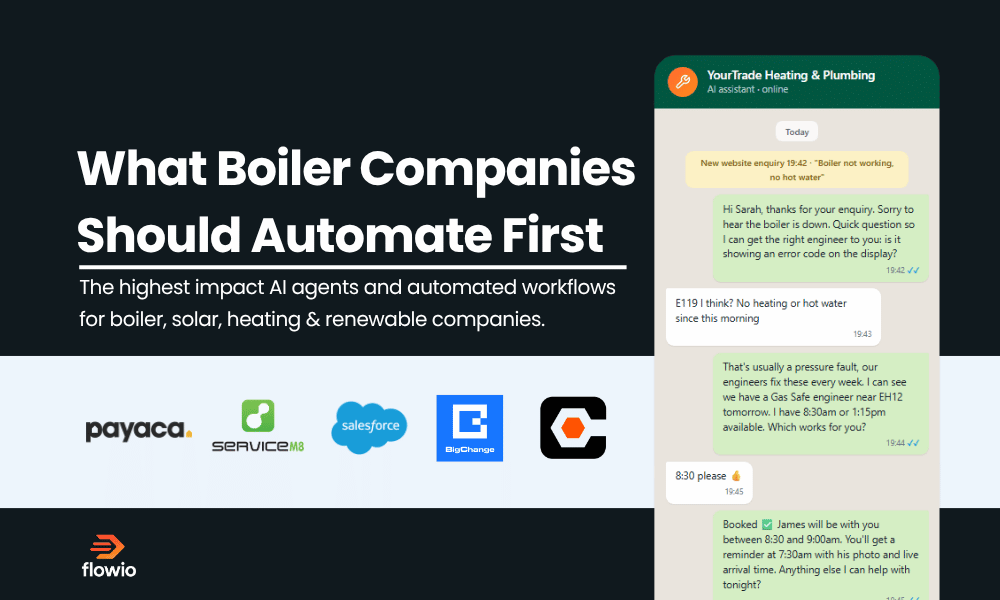
There are 45,457 boiler installation, plumbing, heating and HVAC companies in the UK right now in 2026 according to IBISworld. High-demand energy & renewable installation services that the UK depends…
A bit of news worth sharing: flowio has been named an OpenAI Select Partner, part of the OpenAI Partner Network. I want to explain what that means in practice, because…
Local LLMs or cloud-based AI in 2026? A clear, jargon-free guide for UK businesses on cost, privacy and GDPR, and how to choose the right AI strategy. [Updated for June…
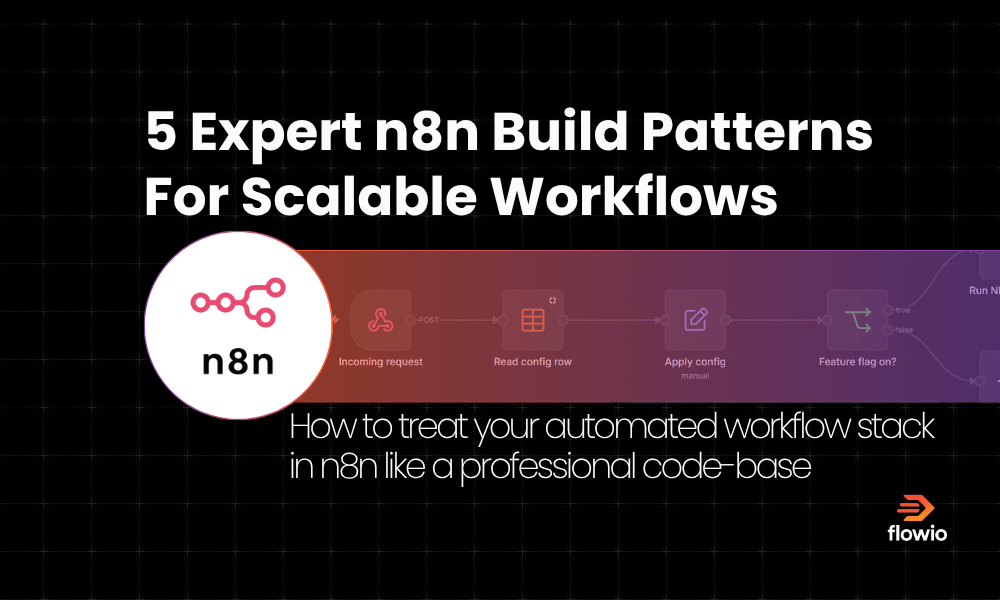
Treat your n8n workflows like a professional software engineering codebase. There is a big difference between an automation that has been thrown together in 5 minutes, compared with a workflow…
Most AI for small business guides are written by people who've never deployed anything, never gone through the pains of after-deployment maintenance, and crucially, have never lived or built a…
Learn how to turn Claude into a senior PPC analyst using a 6-layer context framework. Improve Google Ads ROI and save 60%…
Marketing Automation
10 min read
Most businesses assume they need shiny AI tools to solve their manual, repetitive work headaches.
More often than not - the boring, reliable, and consistent automated workflows are what deliver serious time savings.
MalcolmFounder & CEO, flowio
Every article on this blog is written by Malcolm from live client work: what was automated, what broke, and what it saved.